
I asked Gemini AI Studio about Gemini (Standard) and I’m content with the answer I got (for now). But it got me thinking more questions.
I am as usual late to the party but here I am so better late than never, I guess.
So I heard Google just released (?) AI Studio and the demo is as expected, quite impressive. But I don’t know if it’s just me or is this AI family of multi-modal LLMs growing so many so quickly that I find it a bit cumbersome to keep up. Just me? Okay.
Regardless, I’d rather be stupid and admit it so I can learn from it as fast as possible than pretend I actually know what’s going on. So like any self-respecting AI lowkey enthusiast, I did what I had to do — ask — Gemini AI Studio — of course.
I was hoping I’d get a “oh wow that makes sense” — “let’s go over why that should be happening right now”. But well, I got schooled on this so-called “product strategy and the need to cater to different user segments” reason, which fair enough, does make sense.
While this whole concept of product differentiation has long served the business world, I don’t think it’s too much to ask for one product that can be customized to various applications or levels of functionality, kind of like one product where the standard window or environment is user-friendly or more “entry-level” or casual-use and but also allows for deeper functionality as needed — all embedded in the same application window but with a granular setting open for technical people but also to those non-technical ones with curious minds.
I think the idea of catering to lay use vs. technical use is slowly becoming antiquated by the day. The line between end-user, commercial and enterprise application is starting to blur if not fade completely and more and more “regular” people are being more adept at using these AI platforms and agents as time goes on.
I get that some people will probably have no interest beyond asking for a customized itinerary for their summer vacation or ask what clothes care instruction labels mean but I also think many people will benefit from their exposure to the powerful features that AI Studio offer — which they may not have the joy of serendipity if it’s not there to begin with.
Google AI Studio also goes on to explain that it’s also a matter of resources — that it will be an “overkill” for a regular user to be presented with these virtual knobs and switches that they most likely don’t need. And yes, there is a lot of truth to that. But I think if we want more people to participate in this brave new world of AI-of-Things (AoTs) — yes I made that up — we should let them tinker with switches and knobs in a safe and controlled environment that is not limited to a (for lack of a better word) dumbed-down version of these glorious multi-modal LLMs and agents. Whatever happened to “break it till you make it” (I honestly don’t know if that expression exists but oh well)?
Let regular people play with it and “break” it. Maybe it’ll make it better? I don’t know. I could be so wrong and naive and beyond help but this is what I do — I talk myself through things by writing them down on public spaces, in hopes that I gain some clarity or at the very least, make others think about an otherwise very obvious topic or answer.
So why are there multiple Gemini models and environments co-existing at the same time? I’ll let Gemini AI Studio answer that for you. As for me, I’m no dev, but I think I’ll hang out at the Studio version in the meantime until another one comes along.
Note: Below are screenshots of the short back-and-forth with Gemini AI Studio that brought on this post. 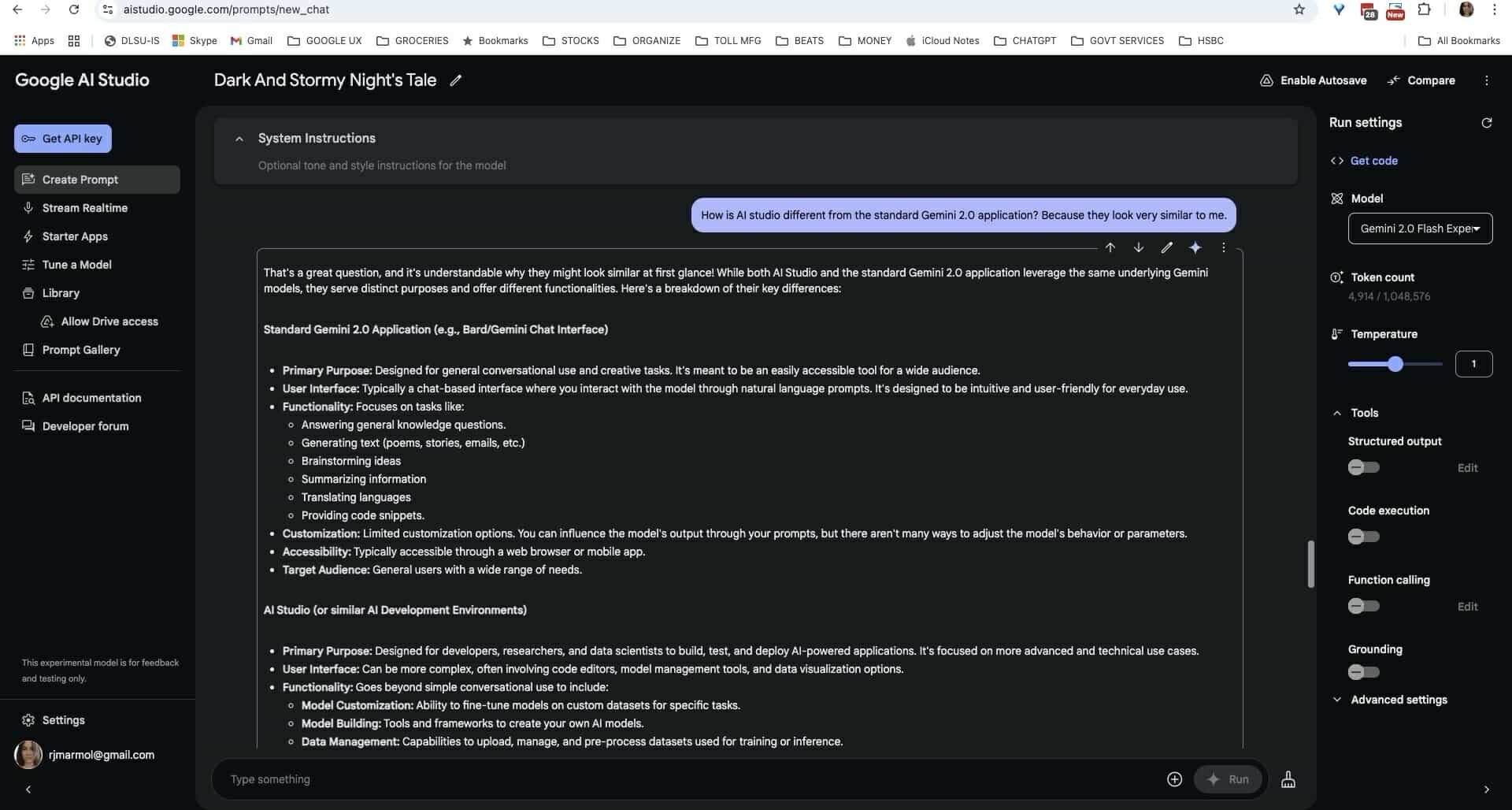
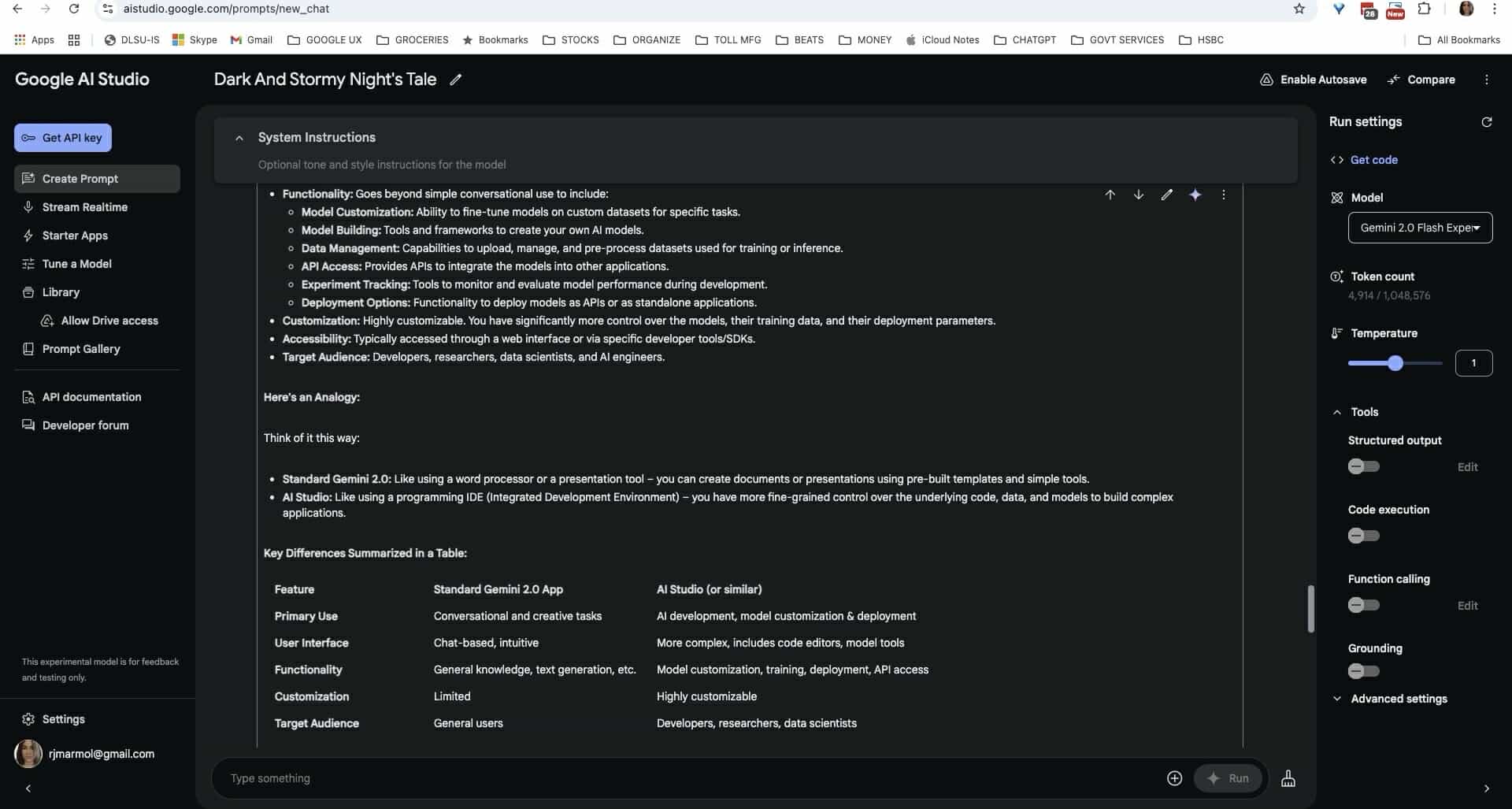
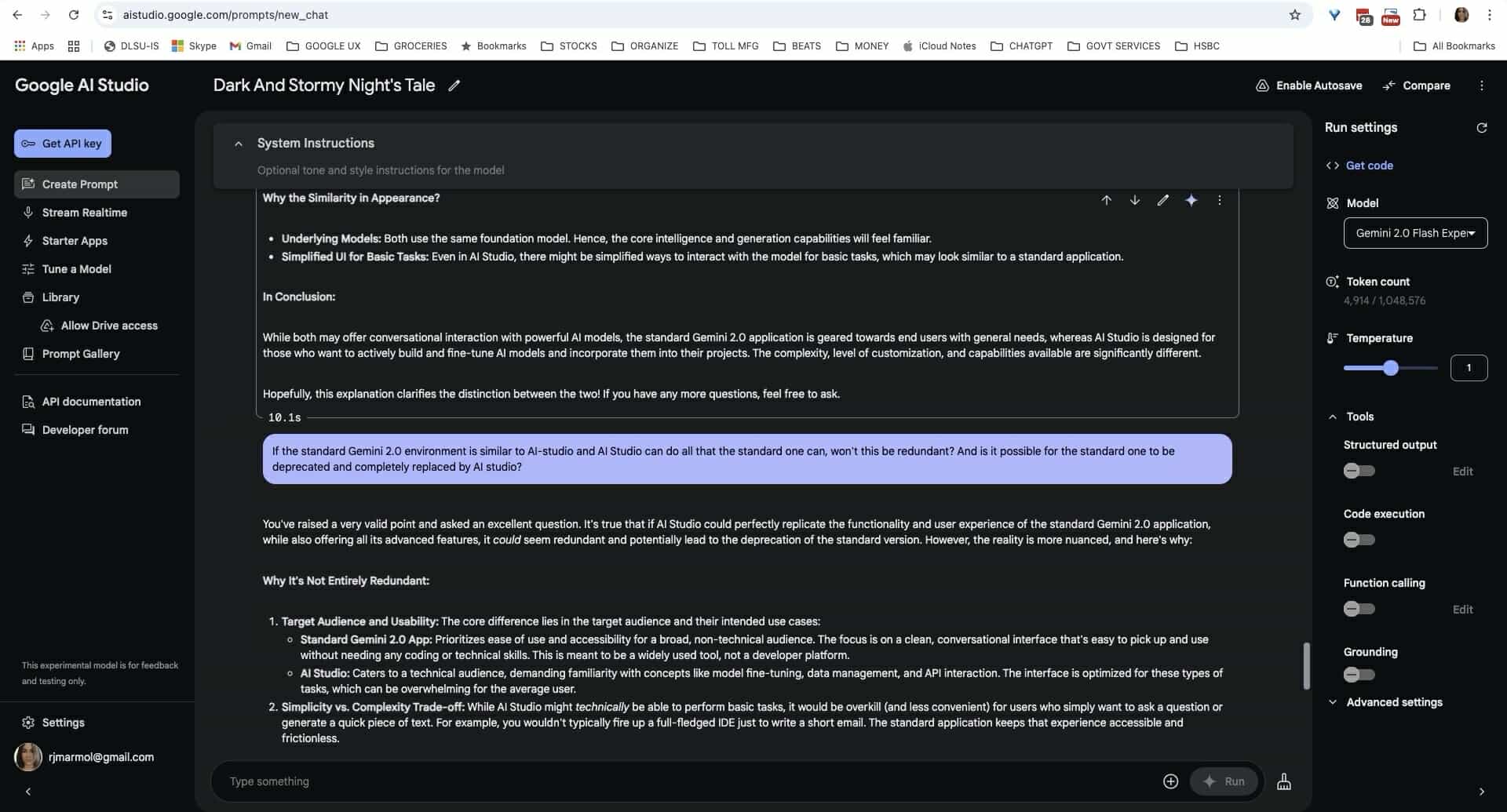
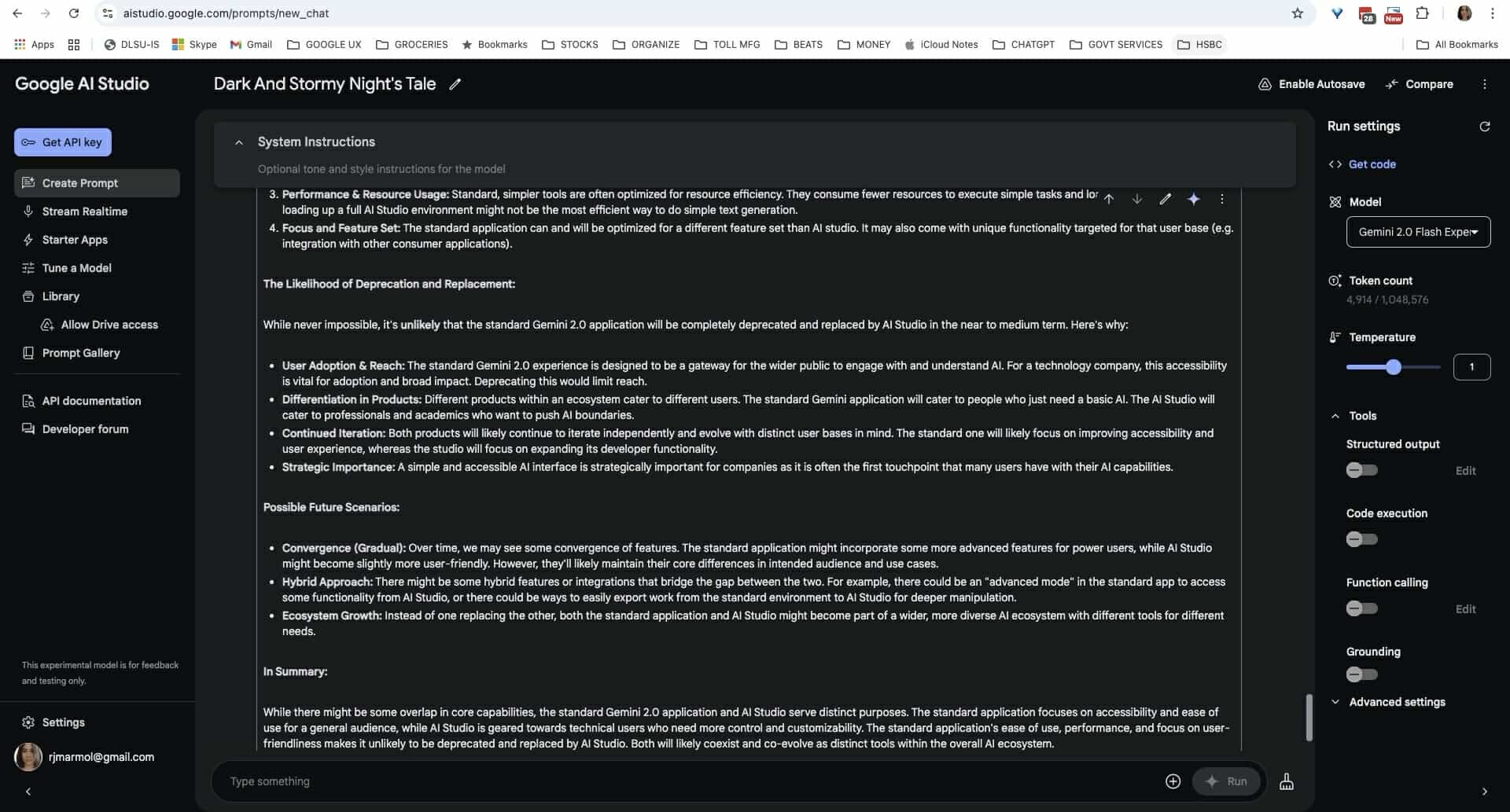
One response to “Why are there multiple Gemini models?”
-

[…] exact “study” materials Google’s NotebookLM generated for me when I loaded the link to my previous blog post about Google Gemini Studio because I kept wondering if what I wrote was stupid or made any little sense to […]
LikeLike
● About Me

I’m RJ Marmol — writer, musician, and independent creator based in Manila.
I write songs, essays, and books about the messy overlap between money, overwhelm, creativity, identity, and rebuilding. Much of my work circles around what happens when life stops feeling manageable — and how we try to think clearly, make decisions, and keep moving anyway.
I’m also the author of Rebuilding Under Debt: Thinking Clearly When Everything Is a Blur, a nonfiction book published under Steady Hand Press. The paperback edition is listed under my full publishing name, Cecilia Regina Aquino Blanquera.
On the music side, I release work as HeyRJ. On the writing side, this site is where I gather my books, essays, notes, and whatever I’m building next.
Music
HeyRJ is my sonic soul project. I create raw, minimalist-style and deeply personal music interpretations that feel like a late-night conversation with your truest self.
By blending lo-fi acoustic textures with poetic honesty, my work explores love, loss, grief, healing, and the quiet in-betweens of life. Each song is a letter — a journal entry — a gentle companion for when the world feels too loud or too quiet.
While my catalogue began with intimate cover renditions, my work is increasingly being shaped by original writing, drawing from years of poems, lived questions, and emotional survival.
“Stuck Home Syndrome” released on March 20, 2026 is my first original 20-track album written during a period when time felt compressed and days began to blur into each other. The songs came from sitting with thoughts that had nowhere else to go — unfiltered, repetitive, and sometimes uncomfortable. It’s a concept album that isn’t built around singles or polish. It’s closer to a continuous inner monologue, recorded with minimal production and very little ornamentation and meant to be listened to as one cohesive body of work. The goal wasn’t to resolve anything, only to document how it felt while it was happening.
On May 29, 2026 I released new original singles – “Rapturous”, “Uh Huh”, “Look At You”, “All That” and “Blew Print”. I continue to release both original and cover songs and intend to so for as long as I can so check back every once in a while — you might. just find something you’ll like.
For business inquiries relating to music, email me at: heyrjmusic[at]gmail[dot]com or my personal email at: rjmarmol[at]gmail[dot]com.
Books
Rebuilding Under Debt: Thinking Clearly When Everything Is a Blur
A nonfiction book about what debt does to the mind — and how to begin functioning again when financial stress has made everything feel blurred, urgent, and overwhelming.
Rather than treating debt only as a financial math problem, the book explores the emotional and cognitive realities of financial distress: shame, decision fatigue, avoidance, panic, relationship strain, and the difficulty of making sound decisions while mentally depleted.
Published under Steady Hand Press. It’s available worldwide in ebook and paperback formats on Amazon. Bookstores and libraries can also be order it wholesale via Ingram.
Contact
For book-related inquiries, media requests, bookstore questions, or discussion-group invitations, you can reach me through the contact page on this site or send me an email to rjmarmol[at]gmail[dot]com or hello[at]steadyhandpress.com
 RJMarmol.com - Since 2008.
Let me know what you think… :)